
Parent Alert January 2024


The Parental Notification by Social Media Operators Act is scheduled to take effect in Ohio on January 15th. This law has been championed by Lt. Gov. Jon Husted since early 2023, and has been fully backed by Governor DeWine and other lawmakers. Here are the key takeaways from this new law:
- Companies must:
- Create a method to determine whether the user is under the age of 16.
- Obtain verifiable parental or legal guardian consent.
- Send written confirmation of consent to the parent or legal guardian.
- Who this includes:
- Social media and online gaming/activities companies: Facebook (Meta), Instagram, YouTube, TikTok, Snapchat, etc.
Ohio will be joining a growing group of states attempting to reduce the negative outcomes that have come with the rise of social media. Governor DeWine said, “The evidence is building that social media platforms can have a negative impact on kids’ mental health and well-being.” Surveys conducted by Gallup in 2023 revealed that teens spend an average of 4.8 hours on social media per day. The Journal of Adolescence published a study showing a correlation between school loneliness and increased smartphone and internet use. Reducing and monitoring youth internet use should lead to positive outcomes in youth mental health. Ohio parents will now face fewer hurdles to being part of the solution.
Please visit the links below for more information.
Publisher’s Note: At the time of writing, A U.S. District Court Judge granted NetChoice a temporary restraining order prohibiting Ohio Attorney General Dave Yost from enforcing this new law. NetChoice represents Meta, Google, Pinterest, and other social media corporations. The lawsuit states that this new law is unconstitutional, and that the broad language of the law does not specify which sites are impacted by this law. A preliminary injunction hearing will be held on February 7th. A link to the article about this development is linked below.
Resources
Explainer: New Ohio law requires parental consent for minor social media use
Gallup: Teens Spend More Time On Social Media Than On Homework
Governor DeWine, Lt. Governor Husted Discuss Social Media Parental Notification Act, Mental Health Priorities
Judge temporarily blocks Ohio social media parental consent law from being enforced
Lt. Governor Jon Husted Champions Social Media Parental Notification Act
Mental Health America: Social Media and Youth Mental Health
Ohio Protects: FAQ – What is the Parental Notification by Social Media Operators Act?
Worldwide Increases in Adolescent Loneliness
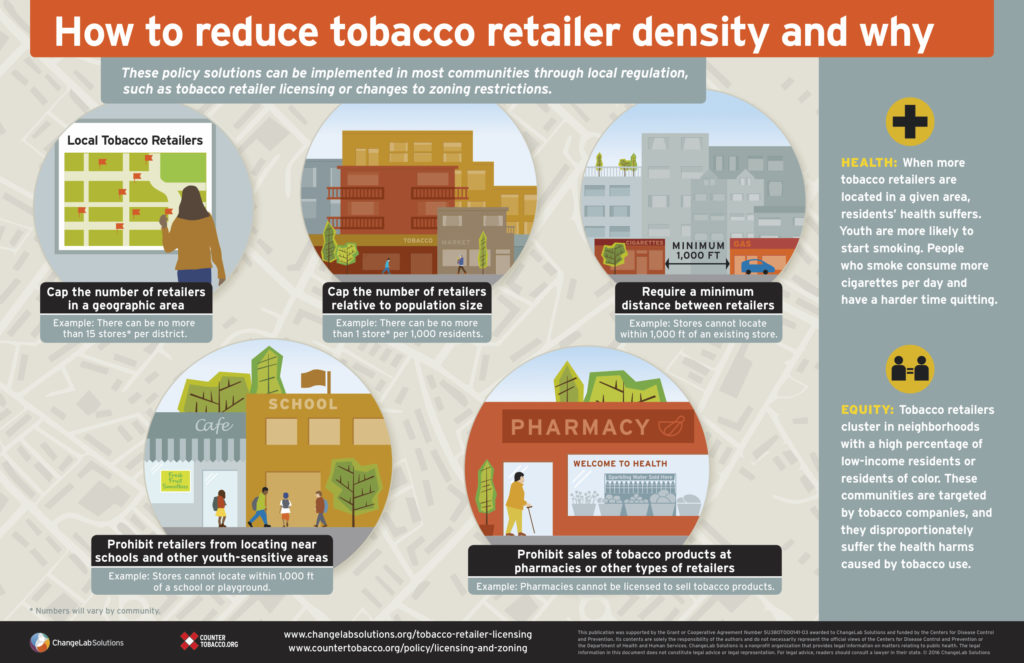
How Does Alcohol and Tobacco Retailer Density Impact Communities?
Have you ever noticed how many alcohol and tobacco retailers are in your city? Ohio Liquor (OHLQ) says about 27,000 licensed private businesses manufacture, distribute, or sell alcohol at retail in the state at any given time. A study published by the National Institutes of Health in 2019 found 11,392 tobacco retailers in Ohio. There are nearly 11.8 million people living in Ohio which means there is roughly one licensed alcohol business for every 437 people and one tobacco retailer for every 1,035 people. Retailer density increases the likelihood that individuals buy and use a product, and there are negative consequences associated with the easy accessibility many communities have to alcohol and tobacco.
Research has shown that increased alcohol retailer density leads to increased excessive alcohol use, which then leads to increases in violence, traffic accidents, and property damage. A study published by the National Library of Medicine also suggested “that spatial access to tobacco and alcohol retailers and exposure to the widespread marketing these sites contain may contribute to substance use and disparities in patterns of use.” The negative impacts of retailer density are not exclusive to adults, and various studies have shown that increased density can increase youth use. Another concern is that many of these outlets center around populations with a low socioeconomic status, and the pricing model of alcohol and tobacco will keep the products cheap enough for those individuals to keep coming back for more. The outcomes associated with alcohol and tobacco availability are concerning, but there are ways to decrease density and improve communities.
The two main methods of reducing density are through licensing and zoning. Licensing helps because the government can track how many businesses there are and can also set guidelines retailers must follow in order to sell their product. These guidelines may include minimum pricing requirements or product security (such as keeping liquor bottles behind a counter instead of on the sales floor). Zoning reduces density by restricting retailer locations by limiting the number of retailers allowed in a geographical area. These approaches have proven to reduce density, which leads to fewer negative outcomes in a community.
Please visit the links below to see how lessons learned from alcohol and tobacco retailer density impacts the emerging marijuana retail environment.
Resources
Lessons from Tobacco Control for Cannabis Policy
Licensing, Zoning, and Retailer Density
The Emerging Marijuana Retail Environment: Key Lessons Learned from Tobacco and Alcohol Retail Research
The Impact of the Retail Environment and Alcohol Outlet Density
Variations in Tobacco Retailer Type Across Community Characteristics: Place Matters
The Connection Between Human Trafficking and Substance Use
January is National Human Trafficking Prevention Month. The goal of this month is to bring awareness to human trafficking and educate the public on how to identify and prevent this crime. The U.S. Department of State estimates that there are 27.6 million trafficking victims worldwide. The term trafficking includes both forced labor and sex trafficking. Public awareness of trafficking continues to increase thanks to the hard work of advocacy groups and coalitions including WATCH (Wayne, Holmes & Ashland Anti-Trafficking Coalition). This awareness is fantastic because communities are able to learn about victims, why they are trafficked, and what is done about the problem. While many people are now aware of this issue, few are aware that there is a connection between human trafficking and substance use.
According to the Office to Monitor and Combat Trafficking in Persons, “…the role of substance use disorder in human trafficking is powerful and pervasive; addiction can increase a person’s vulnerability to being trafficked, can be initiated and manipulated by the trafficker as a means of coercion and control, and can be used by the victim/survivor as a means of coping with the physical and psychological traumas of being trafficked both during captivity and after exiting the trafficking situation.” Stigmas surrounding Substance Use Disorders (SUDs) and individuals with them can create additional issues, and this is especially true among trafficking victims. A RAND Corporation study looking at sex trafficking and substance use found that victims of sex trafficking who have SUDs:
- Are often not properly recognized as victims.
- Often have restricted or limited access to services and quality treatment.
- Often receive unfavorable treatment within the criminal justice system.
Advocacy groups are helping with these issues by training law enforcement to use trauma-informed approaches when dealing with survivors, working with survivors to share their stories and increase awareness, and helping lawmakers develop policies to prosecute traffickers rather than victims. The Office to Monitor and Combat Trafficking in Persons offered four to help reduce stigma and better assist victims:
- Identification and Referral
- Safe Housing
- Trauma-Informed Prosecutions and Special Task Forces
- Listen to Survivors
Please visit the links below to learn more and visit the WATCH website for information and resources from a local advocacy group.
Resources
About Human Trafficking
Sex Trafficking and Substance Use: Identifying High-Priority Needs Within the Criminal Justice System
The Intersection of Human Trafficking and Addiction
WATCH – Human Trafficking
Thank you for being a vital part of our community!
Please click on the link below to send this Parent Alert to a family member or friend. They will also have the opportunity to sign up to receive monthly Parent Alerts.
http://eepurl.com/g79Obf http://eepurl.com/g79Obf
 |  |
Copyright © 2024 Rittman SALT Coalition. All rights reserved.
Our mailing address is:
Rittman SALT Coalition
c/o 104 Spink St.
Wooster, OH 44691
CoalitionsCommunication@gmail.com