
Parent Alert July 2025

Why Scare Tactics Don’t Work
“Don’t swallow your gum. It will take 7 years to digest.”
“You better behave, or the bogeyman will get you.”
“If you don’t brush your teeth tonight, all of your teeth will fall out.”
“Santa won’t bring you any gifts if you don’t listen.”
Scare tactics are not a new concept. They have always been used to encourage desired behavior even if they are not effective long term. The statements above are a good example of this. They emphasize negative outcomes or scary ideas in the hope that the fear of those things will make a child behave. That approach might work for a while, but it will be ineffective once that child learns the truth. Using scare tactics to prevent youth substance use works the same way by emphasizing the worst dangers of drug use to create fear and anxiety, in hopes that the fear alone will prevent or stop risky behaviors.
Prevention has a long history with scare tactics including Reefer Madness in the 1930s, Scared Straight in the 1970s, and videos like the 1987 “This is Your Brain on Drugs” commercial. Those campaigns seemed to resonate in the moment, but over time they were shown to not have an impact on youth substance use. We can look back at those campaigns today and understand why they don’t work, but we are still using similar approaches today, including:
- Mock car crashes that simulate the aftermath of a drunk driving accident using realistic props and professional first responders
- Grim Reaper Day where students are taken out of class at random to represent teens who have lost their lives to substance use
- Fear-based media campaigns that show the physical impact of substance use with before and after pictures
These things sound like they should work. They seem to provide good information, take a grounded approach, or meet kids where they are at. If they are checking all those boxes and more, then why do they not have the impact we think they should? Here are a few reasons:
- People are naturally hardwired to defend against negative messaging. We use denial, avoidance, skepticism, and mock messages that we do not agree with or think will not impact us.
- Young people filter information differently than adults. Teens live in the moment, so the emotional impact from seeing a mock car crash will not stay with them long enough to influence their decision on drinking and driving in the future.
- High risk groups can be more attracted to risky behaviors. This means that the more favorable someone’s attitude is toward a drug/behavior, then the less the warnings will be believed.
- Strong warnings can send unintended messages and influence social norms. Most youth do not use substances, and messaging that focuses solely on the small portion of youth who do can cause young people to believe that substance use is more common among their peers than it is.
Scare tactics are used less than they used to be, but they still exist. Some people believe they are powerful because a visceral reaction looks like a profound impact, some remember the effect the approach had on them as a teenager, and others view them as requirements because the community has always used that approach. Unfortunately, these well-intended decisions can have negative results like increasing youth interest in substances or creating a lack of trust in prevention messages when the advertised dangers don’t match personal experience or stories they hear from friends. They do not create positive outcomes or give youth the information or tools they need to make healthy decisions. Here are a few ways to effectively prevent youth substance use:
- Avoid the instinct of what you have seen in the past.
- Engage youth in positive programs that are evidence-based and ongoing. In other words, rely on research and not fear.
- Focus on building decision-making, coping, and resistance skills.
- Use a social norms approach and focus on positive data that shows most youth do not use substances.
Scare tactics tend to impact parents more than children. The best way to prevent youth substance use is to be open and honest with kids, and start a conversation with them about how to make good choices.
Click on the links below to learn more.
Resources
Prevention Action Alliance – Scare Tactics in Prevention: A Losing Message
Shatterproof – Scare Tactics Won’t Work for Drug Prevention. Here’s Why.
The Talk Institute – The Truth about Fear Tactics
Linwood House – Reefer Madness: Exploring the Cannabis Hysteria of the 1930s
Mental Floss – When ‘Scared Straight’ Shocked 1970s Television Viewers
YouTube – This Is Your Brain…This Is Your Brain On Drugs – 80s Partnership For A Drug Free America

Summer has arrived! There are many ways for you to spend some quality time with friends and family over the next few months. Quality time with others can positively impact our emotional, mental, and physical well-being. We hope you have a relaxing and enjoyable summer whether you take inspiration from the checklist above, the resources below, or already have ideas of your own.
Resources
CDC – Summer and Health
Northeast Ohio Family Fun – 100+ Things to do this Summer in Ohio – 2025 Ultimate Summer Fun Guide
Parents – 100 Summer Fun Ideas for Kids and Parents
Wayne County Public Library – Events Calendar

July 2025 Awareness
Wayne County Coalitions strives to observe the many different awareness events throughout the year that focus on mental health, substance use prevention, and other important topics. Please click on the links to learn more.

Disability Pride Month: Disability Pride Month aims to celebrate people with disabilities, commemorates the signing of the Americans with Disabilities Act (ADA), and promotes disability culture and visibility.
The Arc – Why and How to Celebrate Disability Pride Month
Userway – Disability Pride Month: Celebrating Inclusivity – Now & Always
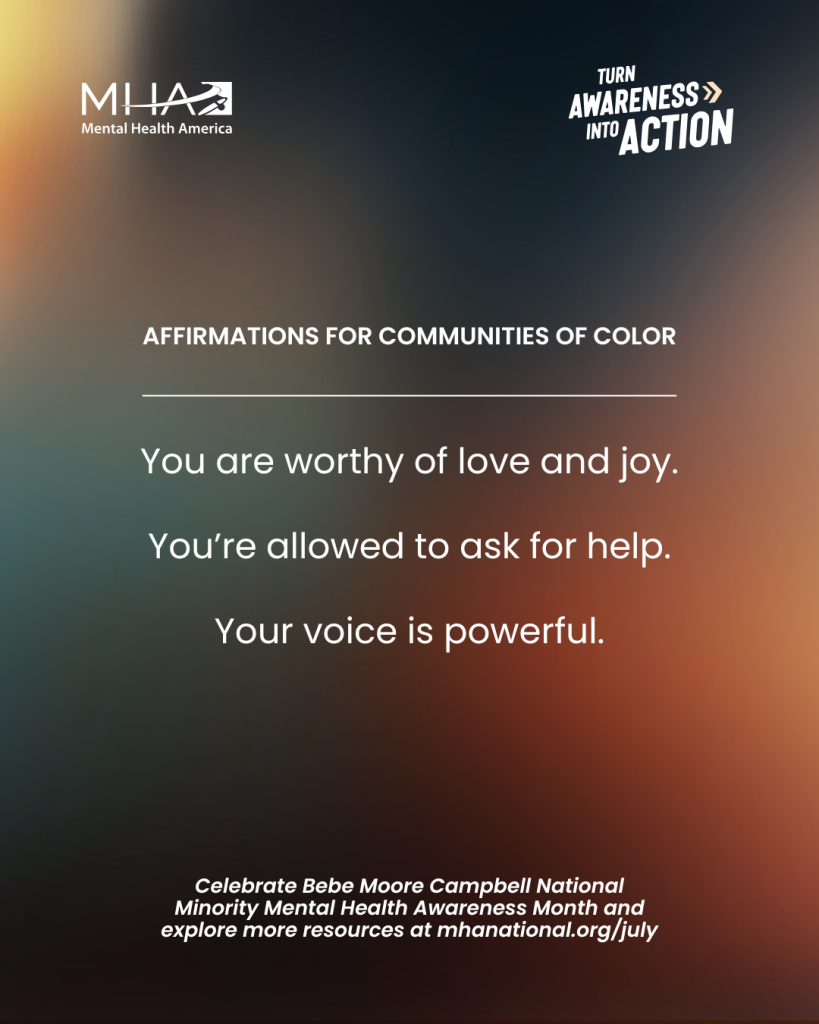
National Minority Mental Health Awareness Month: This month serves as a reminder that BIPOC (Black, Indigenous, and people of color) communities face unique challenges when it comes to mental health and mental health treatment, and that we need to work together to turn this awareness into action.
Mental Health America – BIPOC Mental Health Month
National Alliance on Mental Illness – About Bebe Moore Campbell National Minority Mental Health Awareness Month

Social Wellness Month: Social wellness is a key part of the 8 dimensions of wellness. It is influenced not only by our relationships with others, but also by how we interact with and express ourselves around them.
National Today – Social Wellness Month
Stride – What is Social Well Being?

International Self-Care Day: The World Health Organization (WHO) is celebrating Self-Care Month starting June 24 and ending with International Self-Care Day on July 24. The goals are to raise awareness about self-care, acknowledge the benefits self-care can have on our lives, and call for health systems to include self-care interventions in their programs.
World Health Organization – Self-Care Month 2025
Good Housekeeping – 50 Best Self-Care Ideas for Mental and Physical Wellbeing


Thank you for being a vital member of our community!
Please click on the link below to send this Parent Alert to a family member or friend. They will also have the opportunity to sign up to receive monthly Parent Alerts.
 |  |
Copyright © 2025 Rittman SALT Coalition. All rights reserved.
Our mailing address is:
Rittman SALT Coalition
c/o 104 Spink St.
Wooster, OH 44691
CoalitionsCommunication@gmail.com