
Parent Alert November 2025

Social Determinants of Health
Our health and wellbeing are generally considered to be a result of our diet, exercise, and genetics. However, they are also influenced by other factors like our access to health care, economic situations, and the communities we live in. These other factors are known as social determinants of health (SDOH).

The World Health Organization (WHO) defines SDOH as “The conditions in which people are born, grow, work, live and age, and the wider forces that shape the conditions of daily life.” Those conditions are considered non-medical factors that include economic policies, social norms and policies, climate change, and political structures. SDOH go beyond physical health and influence unemployment rates, people experiencing homelessness, rates of substance use, childhood trauma, and life expectancy. Addressing inequities created by SDOH ensures health equity for everyone which will lead to people living longer, happier lives.
The Centers for Disease Control and Prevention (CDC) says we can advance healthy equity by making sure everyone has access to quality jobs, education, housing, safe environments, and quality healthcare. This can be accomplished by creating neighborhoods that promote health and safety, increasing support for our efforts, and talking to our leaders about creating equitable policies. The Healthy People 2030 project from the Office of Disease Prevention and Health Promotion provides a great breakdown of how to accomplish these goals among many others.
You can learn more about Healthy People 2030 and the impact of SDOH by checking out the links below.
Resources
CDC – Social Determinants of Health
Office of Disease Prevention and Health Promotion – Healthy People 2030
Ohio Department of Health – Social Determinants of Health
NIH – Social determinants of health, substance use, and drug overdose prevention
WHO – Social Determinants of Health
YouTube – Let’s Learn Public Health: What Makes Us Healthy? Understanding the Social Determinants of Health

Advocating for Community Change
Advocacy is an effective strategy that helps create healthy and thriving communities by influencing decisions, practices, policies, and resource allocation within political, economic, healthcare, education, and other social systems. This approach is useful for community groups, nonprofits, and individuals who do not have the resources or capacity to create change in other ways. Advocacy efforts include education, relationship building, coalition building, and communicating about issues. These efforts make an impact by:
- Raising awareness and mobilizing support
- Addressing systemic barriers
- Influencing policies and practices
- Enhancing sustainability
- Safeguarding the mission
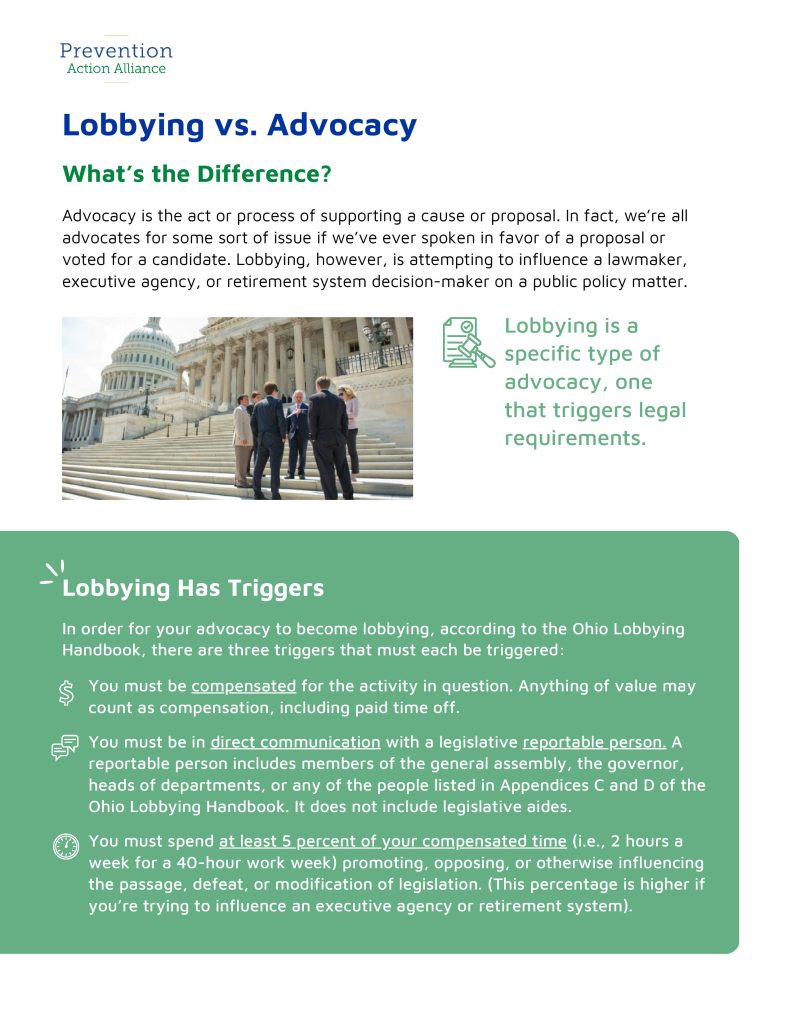
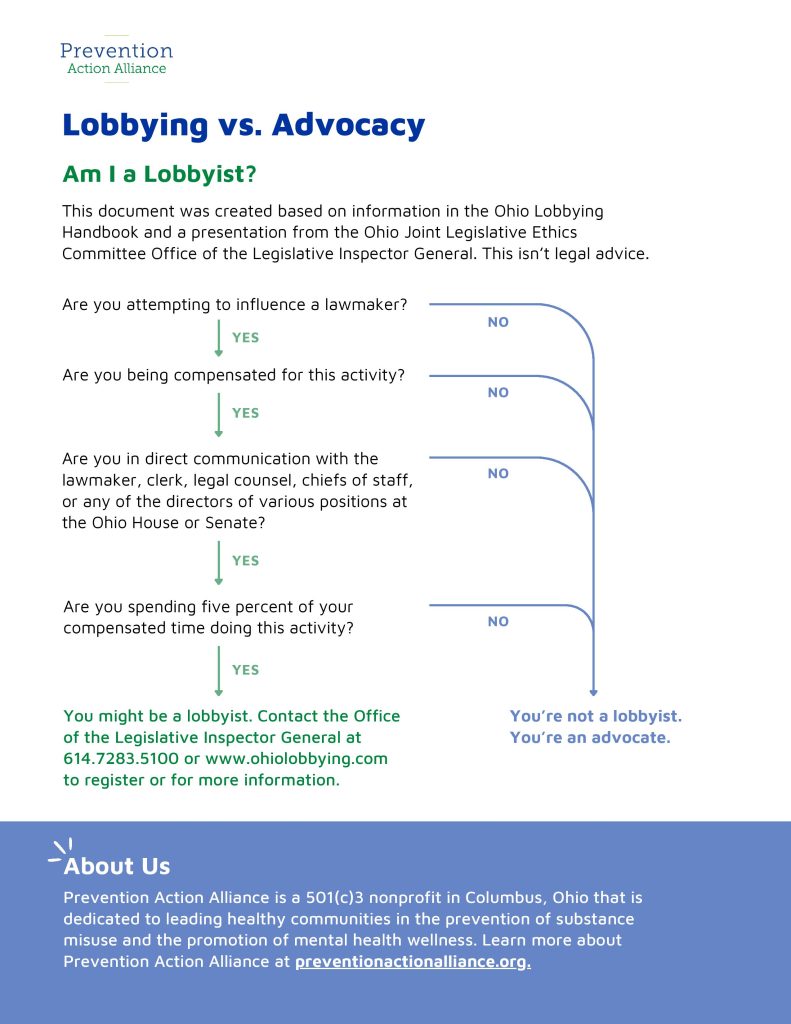
Advocacy can be confused with lobbying, but each approach has distinct characteristics and legal definitions. These differences are important for nonprofit organizations to be aware of because there are laws and grant guidelines in place that prohibit them from lobbying. The goal for advocacy is to create change through education and mobilizing groups to share information, whereas lobbying creates change by addressing specific legislation and asking lawmakers and individuals to vote in favor of a position. The line between advocacy and lobbying is hard to see so here are some ways that advocacy becomes lobbying:
- Direct communication with government officials
- Specific legislation or policy focus
- Spending money on lobbying such as hiring lobbyists or organizing lobbying events
There are some grey areas with these differences. For example, you can share information with your local representative to help them better understand an issue and why you find it important. However, you would cross the line from advocacy into lobbying if you then asked that representative to vote yes or no on upcoming legislation related to that issue.
Advocacy efforts have led to many pivotal changes, including playing a key role in advancing the civil rights movement. The ‘Me Too’ and Black Lives Matter movements are recent examples of how advocacy led to greater change. You can read more advocacy success stories and learn more about how you can advocate for your community by checking out the links below.
Resources
Community Commons – An Introduction to Advocacy as a Change Strategy for Nonprofits
Prevention Action Alliance – Resources for Prevention Advocacy
Yeshiva University – 7 Examples of Social Media Advocacy Success
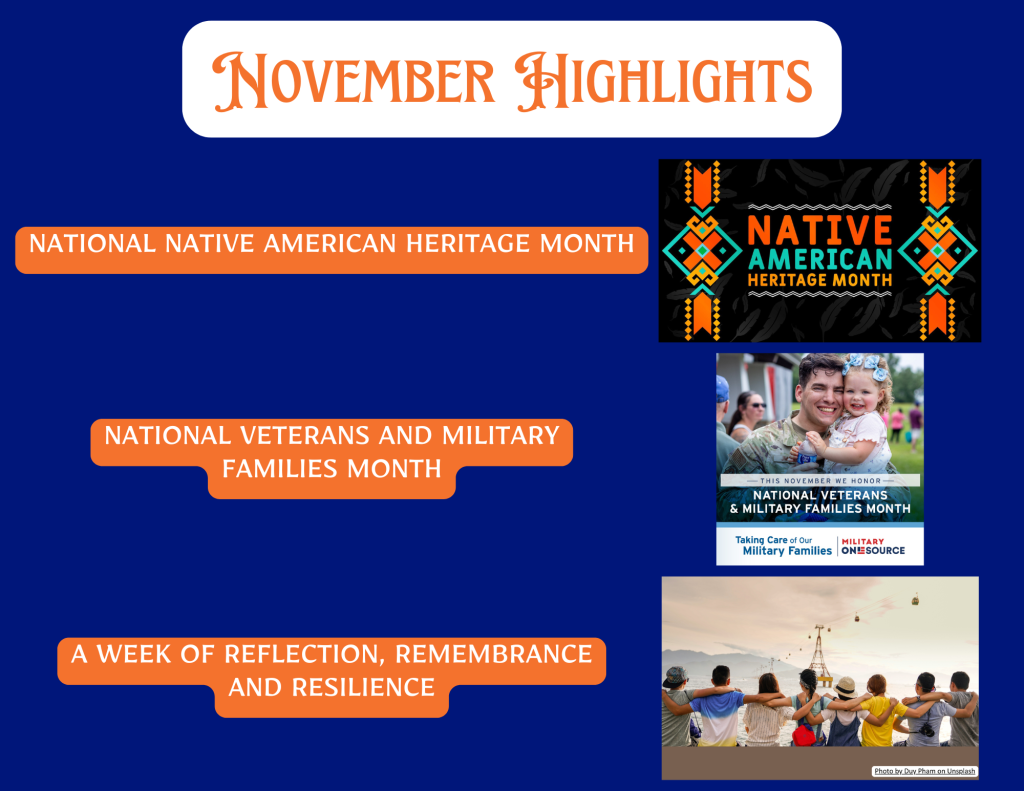
Wayne County Coalitions strives to observe the many different awareness events throughout the year that focus on mental health, substance use prevention, and other important topics. Please click on the links to learn more.
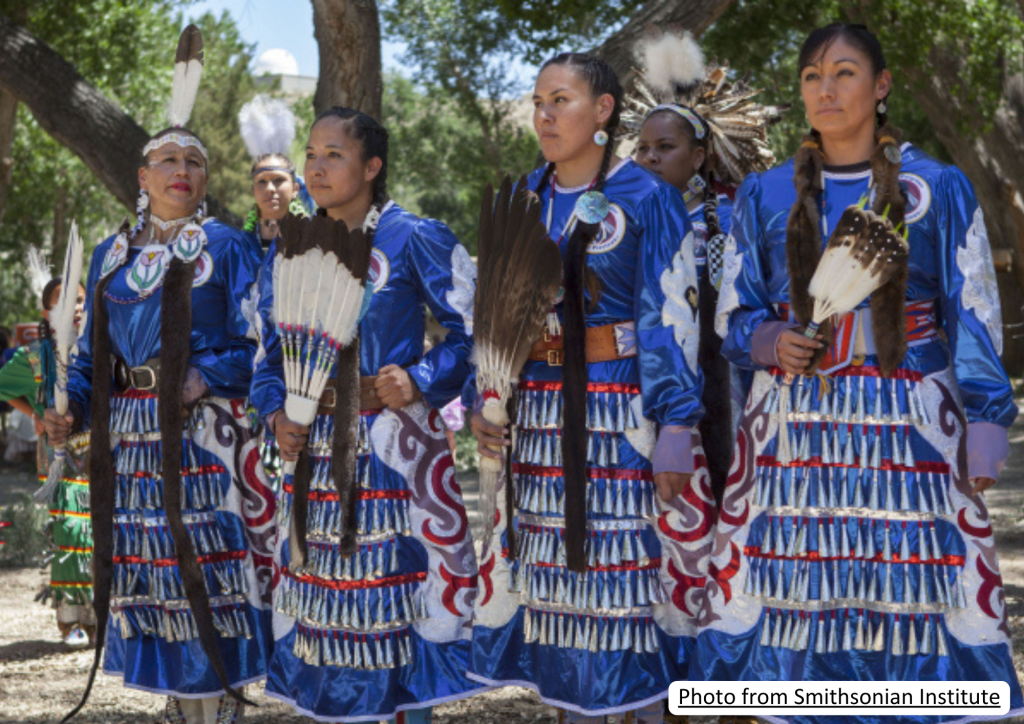
National Native American Heritage Month: This month is dedicated to celebrating the traditions, contributions, and stories of Native American and Alaska Native communities.
CDC – About Healthy Tribes
Smithsonian Institution – Native American Heritage Month
U.S. Department of the Interior – National Native American Heritage Month
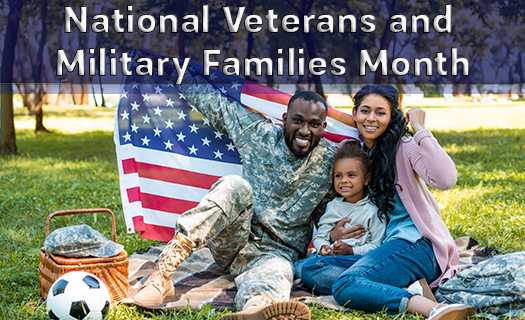
National Veterans and Military Families Month: November is dedicated to honoring and celebrating veterans and military families. Take some time this month to thank military families for the sacrifices they make to support their loved ones who serve, and celebrate Veterans Day on November 11 by thanking a veteran for their service.
Veteran.com – Veterans & Military Families Month 2025
History.com – Veterans Day 2025

Honoring Humanity – A Week of Reflection, Remembrance, and Resilience:
As we move through this poignant week in November, we pause to recognize three deeply meaningful observances: the International Day for Tolerance, Transgender Day of Remembrance, and International Survivors of Suicide Loss Day. Each invites us to reflect on the power of compassion, the importance of visibility, and the strength found in community.
🕊️ International Day for Tolerance reminds us that diversity is not a challenge to overcome, but a gift to embrace. In a world of differing beliefs, identities, and experiences, tolerance is the bridge that connects us.
🌈 Transgender Day of Remembrance honors the lives of transgender individuals lost to violence and discrimination. It is a solemn call to action—to protect, uplift, and affirm trans lives every day.
💙 International Survivors of Suicide Loss Day offers a space for those grieving loved ones lost to suicide. It is a day of connection, healing, and shared hope, reminding us that no one walks this path alone.
Together, these observances ask us to listen more deeply, love more fiercely, and stand more boldly for justice and empathy. May we carry these values forward—not just this week, but always.
UNESCO – International Day for Tolerance (November 16)
GLAAD – Transgender Day of Remembrance (November 20)
American Foundation for Suicide Prevention – International Survivors of Suicide Loss Day (November 23)
Thank you for being a vital member of our community!
Please click on the link below to send this Parent Alert to a family member or friend. They will also have the opportunity to sign up to receive monthly Parent Alerts.
 |  |
Copyright © 2025 Rittman SALT Coalition. All rights reserved.
Our mailing address is:
Rittman SALT Coalition
c/o 104 Spink St.
Wooster, OH 44691
CoalitionsCommunication@gmail.com