
Parent Alert January 2026

Substance Use Prevention – A Year in Review: The Good, The Bad, and What to Watch for in 2026
The field of substance use prevention is constantly evolving as new substances become known, other substances get used less, and state and federal legislation and regulations change. Here is an overview of emerging drugs and substance use trends from 2025, as well as what to keep an eye on in 2026.
The Good
- Only 54% of U.S. adults reported consuming alcohol in a Gallup poll. This is the lowest number since Gallup started tracking Americans’ drinking behavior in 1939.
- Tobacco use continues to decline around the world with fewer than 1 in 5 adults using it. This is down from 1 in 3 adults in the world using tobacco in 2000.
- The latest Monitoring the Future Survey report found that the use of most substances among teenagers in the U.S. has stayed near the low mark that was reached in 2021.
- Ohio is taking steps to address concerns with cannabis and kratom products. Ohio Senate Bill 56 reforms Ohio’s cannabis and intoxicating hemp laws to be more restrictive, and the Ohio Board of Pharmacy issued an emergency ruling banning most kratom products for 180 days.
The Bad
- The 2025 National Drug Threat Assessment from the Drug Enforcement Administration (DEA) reported that the mixing of illicit substances, known as drug cocktails, is becoming more common. This report shared data from the National Forensic Laboratory Information System (NFLIS) indicating that 1 in 4 submissions of cocaine and 1 in 8 submissions of methamphetamine included fentanyl.
- Xylazine, a veterinary tranquilizer, remained the top adulterant found in fentanyl powder, but a more powerful veterinary anesthetic, medetomidine, emerged in the fentanyl supply. Studies suggest that medetomidine is 200 to 300 times more potent than xylazine. Neither of these substances is affected by opioid-reversal drugs like naloxone which can increase negative outcomes from a drug overdose.
- Health Policy Watch shared information from a World Health Organization (WHO) report that estimates 100 million people, 7% of the world’s population, are now vaping. More teens are vaping than adults in all but 6 of the 85 countries with data on e-cigarette use.
- Pew Research Center shared that the percentage of Americans supporting the legalization of cannabis for both medical and recreational use continues to rise. The concern is that this indicates a lower perception of risk despite education and prevention efforts.
What to Look Forward To
- For the first time in Gallup’s trend, most Americans said drinking in moderation (one or two drinks a day) is bad for one’s health. The poll also found that those who do drink reported drinking less. These results continue the positive trend of people reconsidering their relationship with alcohol.
- New nicotine products like e-cigarettes and pouches are becoming more prevalent, but the majority of youth continue to not use nicotine or substances of any kind which shows prevention efforts and education are working.
- A new Truth Initiative survey found that most nicotine users ages 18-24 plan to quit for the New Year or intend to quit within the next year.
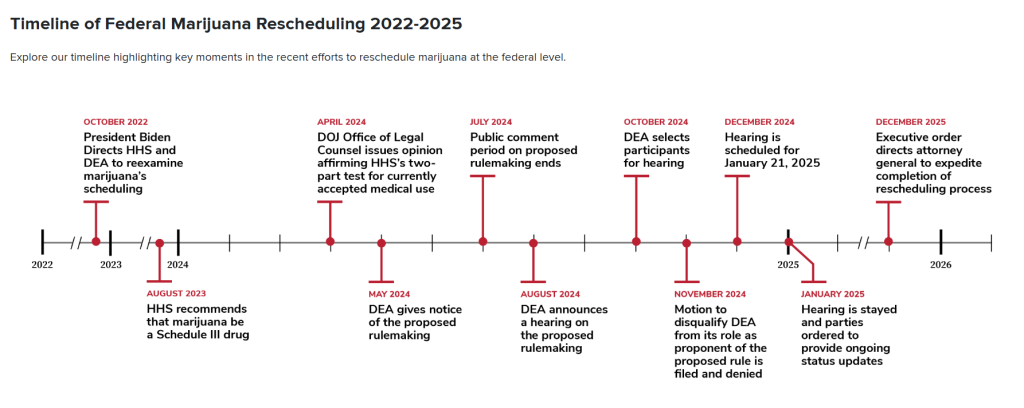
- President Trump signed an executive order asking to expedite the process of rescheduling marijuana to Schedule III. Part of the rescheduling process would require marijuana to undergo rigorous scientific and medical evaluations which have been difficult to conduct in the past. Check out the article below to learn more.
- The DEA has not shared overdose death data from 2025 yet, but their 2025 National Drug Threat Assessment shared that drug overdose deaths were continuing to decline in late 2024. That continued the positive momentum that began months earlier and provided hope that the trend would continue through 2025.
Overall, 2025 showed that substance use prevention and education efforts are working. Younger generations continue to be less likely to use most substances, and conversations about the negative effects substances have on physical and mental health are part of mainstream media. The ever-present threat of fentanyl, the increased use of drug cocktails, and the proliferation of new nicotine products are concerns. However, knowledge is half the battle, and the amount of information we have gives us a great starting point for prevention efforts.
Let’s continue the great prevention work from last year and have an even bigger impact in 2026!!!
Resources
DEA – DEA Releases 2025 National Drug Threat Assessment
NIH – National Drug Early Warning System
NIH – Emerging Drug Trends
NIH – Medetomidine Infiltrates the US Illicit Opioid Market
United Nations Office on Drugs and Crime – Data Portal
The Ohio Legislature – Senate Bill 56
The Ohio Senate – Update: Governor Signs Senate Bill 56 Reforming Ohio’s Marijuana and Intoxicating Hemp Laws
Ohio Office of the Governor – Governor DeWine Updates Request to Board of Pharmacy to Schedule Kratom Compounds as Illegal Drugs
Ohio Capital Journal – Ohio Board of Pharmacy issues emergency ruling banning most kratom products for 180 days
Gallup – U.S. Drinking Rate at New Low as Alcohol Concerns Surge
Health Policy Watch – Tobacco Use is Waning, but 100M People Now Use New Nicotine Products
NIH – Reported Use of Most Drugs Remains Low Among U.S. Teens
NIH – Monitoring the Future National Survey Results on Drug Use, 1975-2025: Overview and Key Findings for Secondary School Students
Partnership to End Addiction – Top 7 Teen Substance Use Trends Parents Need to Know in 2025
Pew Research Center – 9 Facts About Americans and Marijuana
Truth Initiative – New Truth Initiative Survey Indicates Most Young People Who Use Nicotine Say 2026 is Their Year to Quit
Marijuana Rescheduling: What it Means and What Comes Next
President Trump signed an executive order titled Increasing Medical Marijuana and Cannabidiol Research on 12/18/2025. This order has four main goals:
- Recognize and improve knowledge of the medical uses of marijuana and cannabidiol for patients and doctors
- Remove barriers to research
- Improve access to cannabidiol products
- Deliver on promises to help improve healthcare for all Americans
The order gained attention because it instructs the Attorney General to expedite completion of the process to reschedule marijuana from Schedule I to Schedule III under the Controlled Substances Act (CSA), shifting it from a category with no accepted medical use and a high risk of misuse to one with recognized medical use and lower misuse potential. It is important to note that this order does not, and cannot, reschedule marijuana. The Drug Enforcement Administration (DEA) makes decisions about scheduling, rescheduling, and descheduling substances. Those decisions follow formal rulemaking processes under the CSA which include scientific and medical evaluations from the Department of Health and Human Services (HHS). The rescheduling process includes:
- Initiating the rescheduling process
- HHS scientific and medical evaluation
- DEA notice of proposed rulemaking after receiving the HHS recommendation
- Public comment period
- Hearing on the record
- DEA publishes a final rule in the Federal Register. This rule determines the new scheduling status of the substance.
Marijuana is currently at the hearing step of the rescheduling process. A hearing was scheduled to begin on 1/21/2025, but it was postponed by an administrative law judge on 1/13/2025 while an appeal by an involved party was being resolved. The next update in the process came with the executive order on 12/18/2025. Rescheduling marijuana does more than redefine its accepted use in medicine and potential for misuse; it also comes with changes for consumers and cannabis businesses. Consumers would not see an immediate impact from rescheduling, but businesses would. The changes for businesses include:
- Tax benefits – They would be able to deduct business expenses on federal tax returns which they cannot do while marijuana is a Schedule I substance.
- Marketing – Marketing efforts could increase and expand with additional funds being available after deducting expenses.
- Banking access – Many cannabis businesses struggle to find banks willing to work with them due to marijuana’s Schedule I status. This could change if marijuana is rescheduled.
Rescheduling marijuana would signal a significant change in federal cannabis policy and would have a lasting impact on America’s relationship with cannabis. The rescheduling process still has a couple of steps to finish, and the final decision on rescheduling is ultimately up to the DEA. Check out the links below to learn more about the scheduling process and what the different schedule categories mean.
Note: The impact cannabis has on an individual’s physical and mental health will not change regardless of its schedule category. Check out this information from American Addiction Centers to learn more.
Resources
The Ohio State University Moritz College of Law – Federal Marijuana Rescheduling: Process and Impact
NPR – Marijuana rescheduling would bring some immediate changes, but others will take time
Psychology Today – Marijuana Rescheduling is Now Real
The White House – Increasing Medical Marijuana and Cannabidiol Research
The White House – Fact Sheet: President Donald J. Trump is Increasing Medical Marijuana and Cannabidiol Research
Drug Enforcement Administration – Drug Scheduling
American Addiction Centers – Marijuana Side Effects: Physical, Mental, and Long-Term Effects

Wayne County Coalitions strives to observe the many different awareness events throughout the year that focus on mental health, substance use prevention, and other important topics. Please click on the links to learn more.
National Human Trafficking Prevention Month: An estimated 27.6 million people – adults and children – are victims of human trafficking around the world. Trafficking includes both forced labor and sex trafficking. National Human Trafficking Prevention Month, also called National Slavery and Human Trafficking Prevention Month, brings awareness to this issue and educates the public about how to identify and prevent this crime. Check out the toolkit from the Collaborative to End Human Trafficking for a list of upcoming events and trainings.
Collaborative to End Human Trafficking – 2026 Human Trafficking Prevention Month Toolkit
Ohio Attorney General – AG Yost Highlights 2025 Human Trafficking Wins
U.S. Department of State – National Human Trafficking Prevention Month Fact Sheet

Mental Wellness Month: Mental Wellness Month is observed in January because we need a reminder to prioritize our mental health after a busy holiday season. Mental wellness is an important part of our physical and mental health, so take time to practice self-care and start 2026 off right.
BetterHelp – January is Mental Wellness Month: Ways to Prioritize Your Mental Health

Martin Luther King Jr. Day (January 19): The King Holiday observance is a call to reflect, rejoice, recommit, and honor the legacy of Dr. Martin Luther King Jr. and his vision. This year’s theme is Mission Possible II: Building Community, Uniting a Nation the Nonviolent Way.
The King Center – King Holiday 2026
National Museum of African American History & Culture – The 15 Year Battle for Martin Luther King Jr. Day

International Holocaust Remembrance Day (January 27): Also known as Holocaust Memorial Day, this marks the anniversary of the liberation of Auschwitz-Birkenau, the largest Nazi death camp. This year’s theme, Bridging Generations, is a reminder that the responsibility of remembrance doesn’t end with the survivors – it lives on through their children, grandchildren, and through all of us.
Holocaust Memorial Day Trust – What is Holocaust Memorial Day?

Resources
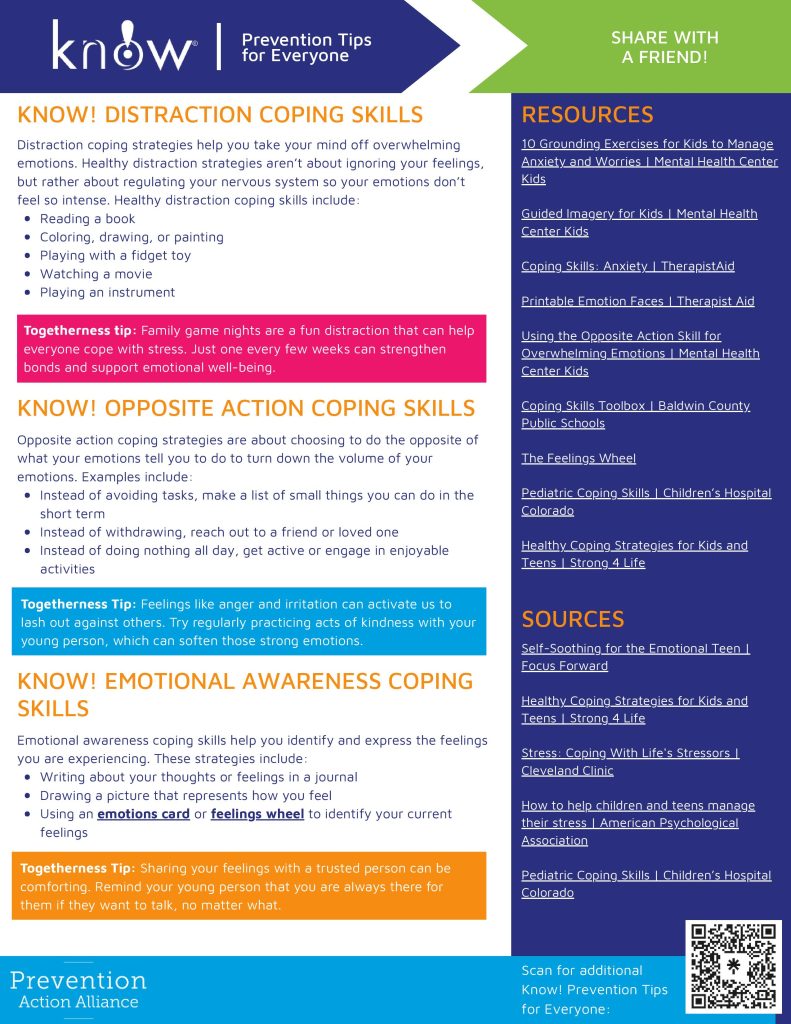
American Psychological Association – How to Help Children and Teens Manage Their Stress
Children’s Hospital Colorado – Pediatric Coping Skills
Cleveland Clinic – Stress: Coping with Life’s Stressors
Focus Forward Counseling – Self-Soothing for the Emotional Teen
Mental Health Center Kids – 10 Grounding Exercise for Kids to Manage Anxiety and Worries
Mental Health Center Kids – Guided Imagery for Kids
Mental Health Center Kids – Using the Opposite Action Skill for Overwhelming Emotions
Strong4Life – Healthy Coping Strategies for Kids and Teens
Therapist Aid – Coping Skills: Anxiety
Therapist Aid – Printable Emotion Faces
The Feelings Wheel
Thank you for being a vital member of our community!
Please click on the link below to send this Parent Alert to a family member or friend. They will also have the opportunity to sign up to receive monthly Parent Alerts.
 |  |
Copyright © 2026 Rittman SALT Coalition. All rights reserved.
Our mailing address is:
Rittman SALT Coalition
c/o 104 Spink St.
Wooster, OH 44691
CoalitionsCommunication@gmail.com