
Parent Alert May 2026

Healthy Habits for Physical and Mental Health
Taking care of our physical and mental well-being is the key to a happy, healthy life. Healthy lifestyle behaviors can prevent and treat a myriad of physical and mental health conditions. They also set the building blocks for lifelong well-being in children and teens. Developing and maintaining good habits can be difficult, so here are some things you can do to get started.
According to the National Institutes of Health (NIH), “Positive physical health habits can help decrease your stress, lower your risk of disease, and increase your energy.” Healthy eating and physical activity are simple ways to support brain development and healthy growth, boost immunity, and boost academic performance by improving attention and memory. Children and teens ages 6-17 should be physically active for at least 60 minutes per day, and adults should get at least 150 minutes of moderate physical activity per week. A great way to maintain healthy habits is to do them together, so start by eating healthy meals together and make physical activity a part of your family’s daily routine.
The American Psychiatric Association has identified six lifestyle areas that promote mental health and wellness.
- Physical activity
- Diet and nutrition
- Mind-body and mindfulness practices
- Restorative sleep
- Social connections
- Avoiding harmful substances
These practices require individual effort and can be adapted in many ways. A good way to start incorporating these things into your life is to start small. Identify one change you would like to work towards for yourself or your children and focus on that. Changes in one lifestyle area can create improvements in other areas. For example, mind-body practices like yoga and meditation can reduce stress, and this reduction in stress improves overall well-being.
Healthy routines like getting enough sleep, reducing screen time, and maintaining social connections benefit overall health and well-being. It can be hard to maintain these habits especially as children get older and schedules get busier. Be sure to set realistic goals, ask for support from family and friends, and give yourself grace if things do not work out the way you planned. Everyone supports their physical and mental health in different ways. Find what works for you and your children, and see how a few healthy habits can improve your lives.
Check out the links below to learn more.
Resources
American Psychiatric Association – Lifestyle to Support Mental Health
CDC – Tips to Support Healthy Routines for Children and Teens
Mental Health America – 31 Tips to Boost Your Mental Health
NIH – Physical Wellness Toolkit
St. Luke’s Penn Foundation – 10 Daily Habits for Mental Wellness
Vaping 101: What You Should Know and How to Help Someone Quit
Vaping is one of the top substance use trends among youth alongside underage drinking and cannabis use. 1.63 million youth reported current e-cigarette use in 2024 according to the Centers for Disease Control (CDC). It is important to recognize that the majority of youth are not vaping or using substances; however, parents should still know about vaping so they can recognize signs of use and how to help their child if they start using vapor products.
What is Vaping?
Vaping is the act of inhaling vapor from an electronic cigarette or similar device. A common misunderstanding is that this is just harmless “water vapor,” when in fact the vapor contains nicotine, flavorings, and other harmful chemicals. Some vaping liquid also contains THC, the psychoactive component in marijuana. Other names for e-cigarettes include e-cigs, vapes, and vape pens. There are disposable, refillable, and pre-filled types of e-cigarettes. They can look like USB flash drives, pens, or smartphones, and some so-called “smart vapes” have digital display screens with games that reward use.
Health Effects and Signs of Use
Short-term risks include coughing, throat irritation, headaches, and increased heart rate. Long-term risks include lung damage, nicotine addiction, and negative impacts on adolescent brain-development. Vapes also contain cancer-causing chemicals and heavy metals like nickel, tin, and lead that cause additional harm to the lungs. Vaping is an easy behavior to hide due to the devices being easily concealed, and because there are no heavy smells or physical signs like yellowing nails and teeth like there are with tobacco cigarettes. Here is a list of things to look for from GUIDE, Inc.:
- Behavioral changes – Secrecy, mood swings or spending more time alone
- Physical signs – Persistent cough, frequent thirst or nosebleeds
- Objects and scents – Unfamiliar devices (USB-like sticks, cartridges, pens) or sweet/fruity smells in unusual places
- Academic or social changes – Drop in grades, new peer groups or withdrawal from activities
Why Do Youth Vape?
Youth choose to vape for many reasons. E-cigarette companies use effective marketing techniques like falsely claiming that using an e-cigarette is safer than smoking, and promoting fruit and candy flavors that appeal to youth. Peer influence, social pressure, and seeking a way to cope with stress and anxiety also play a factor. Youth can become curious when they see friends and family members vaping. Lastly, nicotine is a highly addictive substance, and adolescent brains are uniquely susceptible to it. This means that what starts as experimentation can quickly develop into an addiction.
How You Can Help
The number one thing you can do as a parent is talk to your kids. Kids are less likely to use substances when their parents talk to them about the dangers of substance use. Be sure to use facts and not scare tactics when having these conversations. Another way you can help is by being supportive if your child tells you they have been vaping. Their willingness to tell you shows that they want to quit, and that they trust you to help with that process. Check out these resources from the CDC if your child needs help rejecting or quitting vaping.
Vaping continues to gain popularity as an alternative to smoking because effective marketing campaigns and widespread misinformation make it look like a harmless activity. This is far from the truth as research continues to show several health risks related to vaping, especially for youth. Understanding what these risks are and how to talk to your child about them will reduce the likelihood that they will experiment with e-cigarettes. Check out the links below to learn more.
Resources
CDC – About E-Cigarettes (Vapes)
CDC – E-Cigarette Use Among Adults
CDC – E-Cigarette Use Among Youth
CDC – Health Effects of Vaping
CDC – Vaping and Quitting
CDC – Why Youth Vape
CDC – Resources to Help Youth Reject or Quit Vaping
GUIDE Inc. – Vaping 101: What Teens and Parents Need to Know
Nemours Kids Health – Vaping: What Parents Should Know
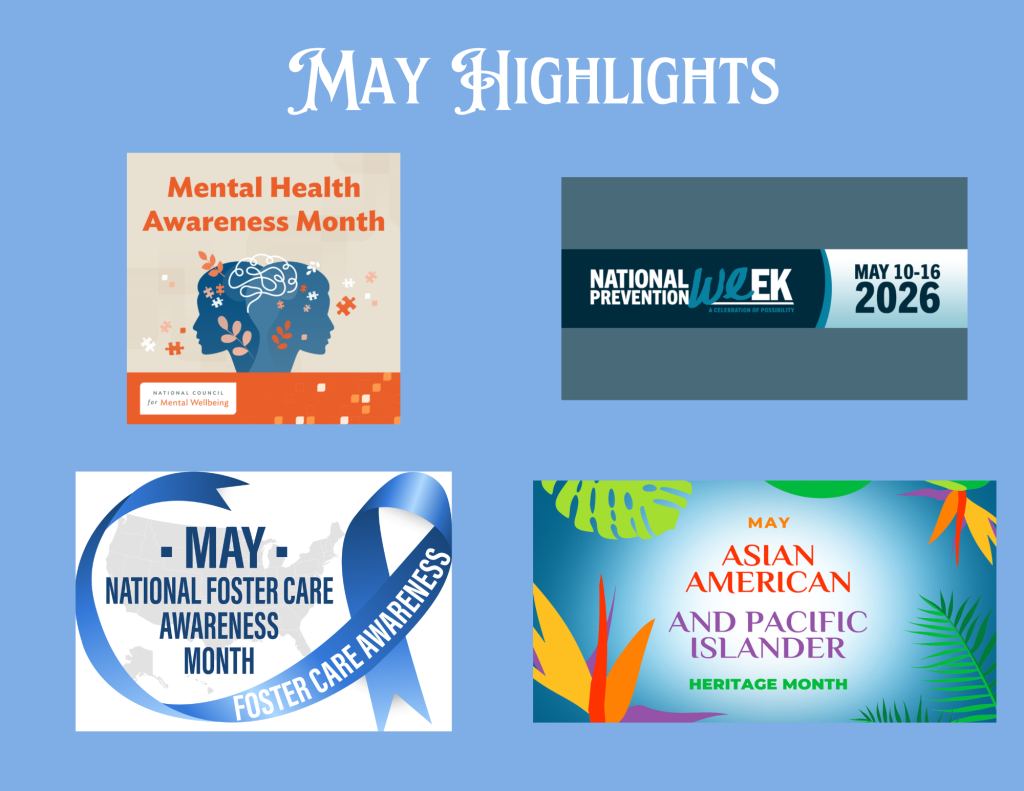
Wayne County Coalitions strives to observe the many different awareness events throughout the year that focus on mental health, substance use prevention, and other important topics. Please click on the links to learn more.
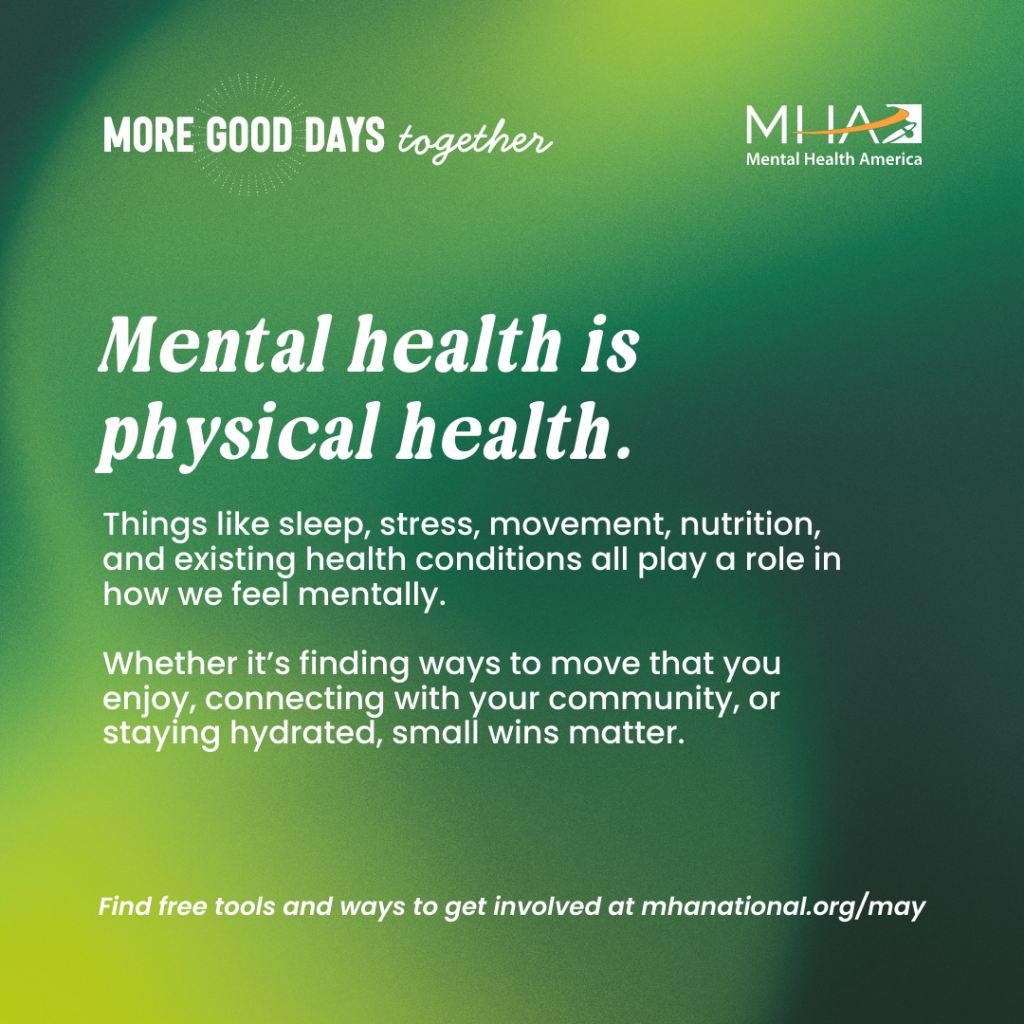
Mental Health Awareness Month: According to the National Council for Mental Wellbeing, “Mental health awareness plays a crucial role in reducing stigma, encouraging early intervention and fostering empathy and understanding.” This year’s theme, More Good Days, Together, asks us to reflect on what a “good” day looks like for ourselves and our communities so we can work towards making more good days possible for everyone.
Mental Health America – Mental Health Month 2026
National Council for Mental Wellbeing – Mental Health Awareness Month
National Prevention Week: National Prevention Week is May 10-16, 2026. According to SAMHSA (Substance Abuse and Mental Health Services Agency), the purpose of National Prevention Week is to:
- Involve communities in raising awareness of substance misuse and mental health issues, implement prevention strategies, and showcase the effectiveness of evidence-based prevention programs.
- Foster partnerships and collaborations with federal agencies and national organizations dedicated to improving public health.
- Promote and disseminate quality substance use prevention and mental health promotion resources and publications.
SAMHSA – National Prevention Week

National Foster Care Awareness Month: There are over 365,000 children and youth in foster care in the U.S. according to the Child Welfare Information Gateway. Foster Care Awareness Month is a call to action for prospective foster parents, community members, and child welfare advocates to make a difference in the lives of vulnerable children.
Child Welfare Information Gateway – National Foster Care Month
Families United Network – May is National Foster Care Awareness Month
Wayne County Children Services – Foster Care & Adoptive Placement

Asian American & Pacific Islander Heritage Month: Asian American & Pacific Islander Heritage Month recognizes the contributions and history of individuals from the Asian continent and the Pacific Islands of Melanesia, Micronesia, and Polynesia in the U.S.
Asian & Pacific American Heritage Month – Homepage
History – Asian American, Native Hawaiian/Pacific Islander Heritage Month

Each year during graduation season, we like to remind parents and caregivers that we all share a role in helping teens celebrate safely.
Graduation is a major milestone, and the guidance we provide as adults matters. Underage drinking is illegal and dangerous, and setting clear, healthy expectations can help teens make safer choices during graduation parties and celebrations. That shared responsibility is what the Parents Who Host Lose the Most: Don’t Be a Party to Teenage Drinking campaign is all about. You may see Parents Who Host Lose the Most signs and billboards around Wayne County, reflecting our community’s shared commitment to celebrating teens safely.
Celebrating graduation doesn’t have to include alcohol to be meaningful or fun. Families can celebrate graduation with alcohol‑free options like a brunch or dinner, a cookout, a movie or game night, a dessert or mocktail bar, or a special experience such as a day trip or concert. These moments show teens that big accomplishments can be celebrated in ways that are both fun and safe.
We wish you a safe, happy prom and graduation season!
To learn more about Parents Who Host Lose the Most, visit PreventionActionAlliance.org
Please visit WayneCountyCoalitions.com for more information.

Resources
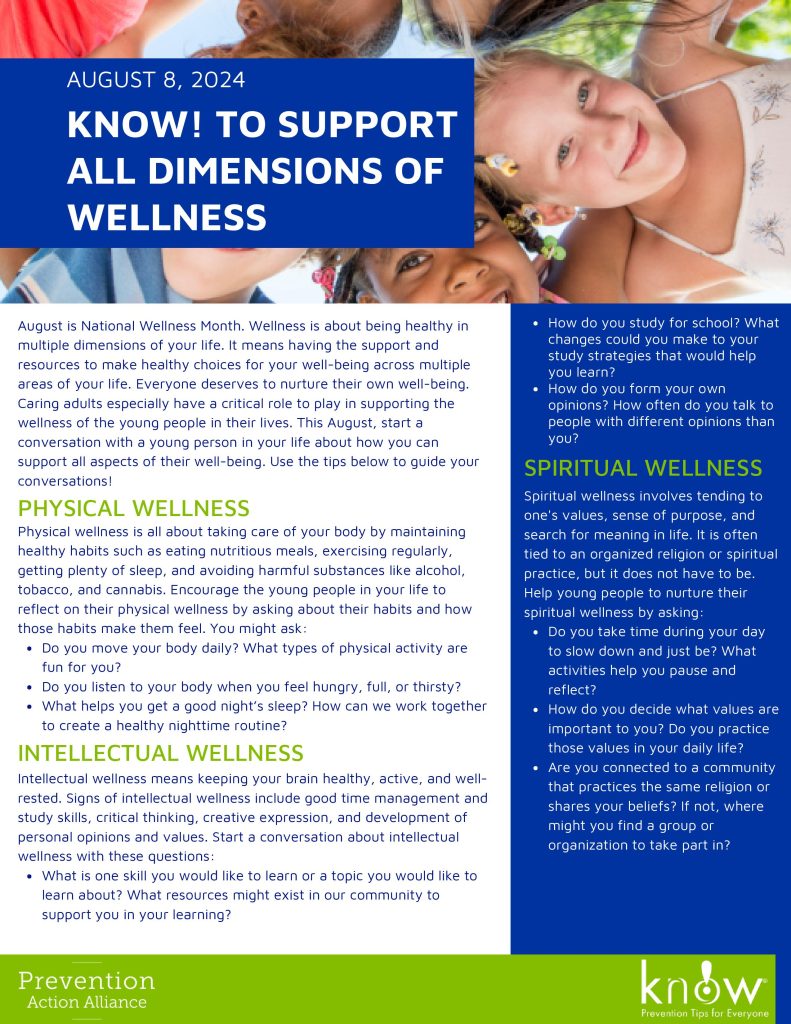
SAMHSA – Creating a Healthier Life: A Step-By-Step Guide to Wellness
Colorado State University Pueblo – 9 Dimensions of Well-Being
University of New Hampshire – The Well-Being Wheel

Resources
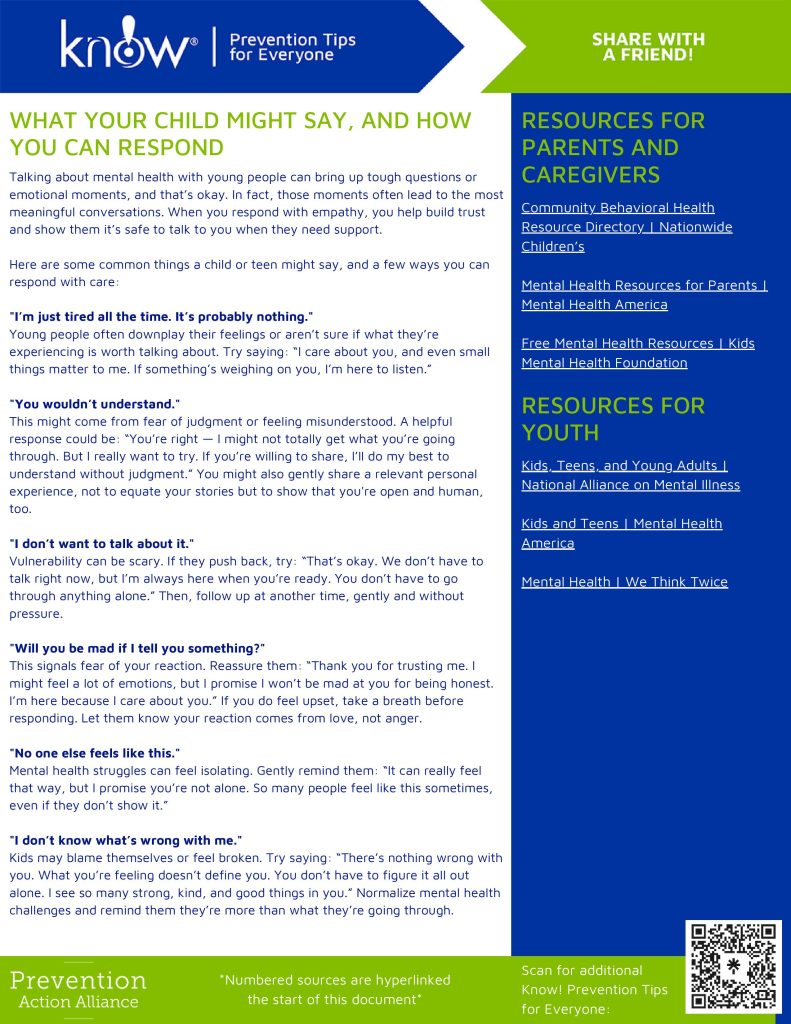
Nationwide Children’s – Community Behavioral Health Resource Directory
Mental Health America – Mental Health Resources for Parents
The Kids Mental Health Foundation – Free Mental Health Resources
National Alliance and Mental Illness – Kids, Teens, and Young Adults
Mental Health America – Kids and Teens
Thank you for being a vital member of our community!
Please click on the link below to send this Parent Alert to a family member or friend. They will also have the opportunity to sign up to receive monthly Parent Alerts.
 |  |
Copyright © 2026 Rittman SALT Coalition. All rights reserved.
Our mailing address is:
Rittman SALT Coalition
c/o 104 Spink St.
Wooster, OH 44691
CoalitionsCommunication@gmail.com